The tank card
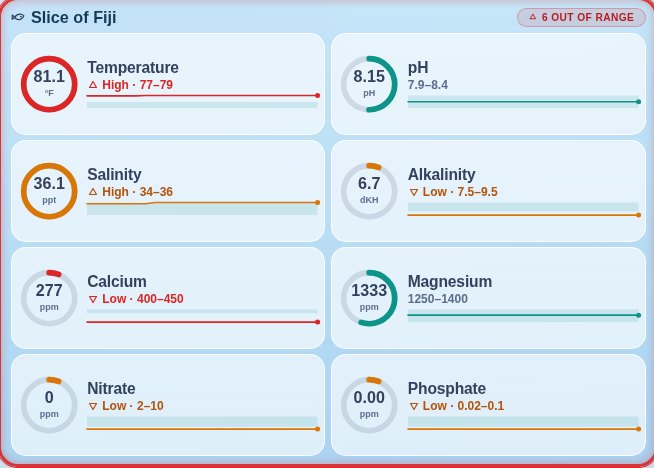
Temperature, pH, salinity, alkalinity, calcium, magnesium, nitrate and phosphate as ring gauges, each with its target range and a 24-hour trend line underneath. Green when it's right, amber when it's drifting, red when it isn't.
 ReefGauge
Coming early 2027
ReefGauge
Coming early 2027

A 10-inch touchscreen for the wall beside your tank. It reads your controller, your automated tester and your ICP lab, and shows the whole reef the moment you walk in — every number, every trend, and an alert you cannot miss when something is wrong.

ReefGauge talks to the gear on your network directly — no account with us, no cloud in the middle.
Every probe on the Apex, plus Trident and Trident NP results as they land — alkalinity, calcium, magnesium, nitrate and phosphate, tested up to 24 times a day.
ReefRun, ReefMat, ReefDose and ReefATO+ report in over the LAN: pump state, roll remaining, dosing done, top-off running. Skimmer cup full? You'll know.
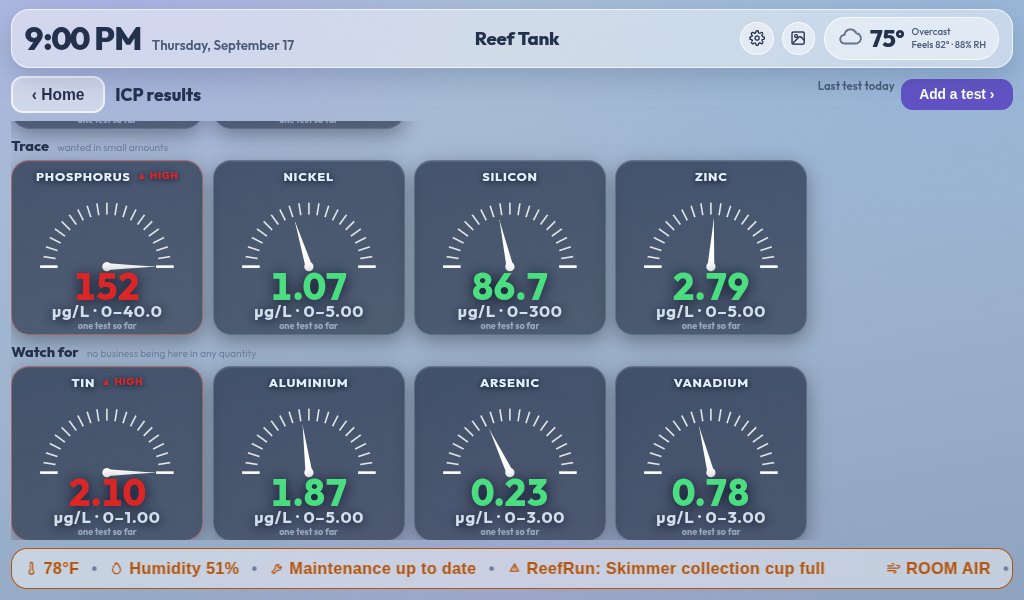
Drop in the PDF from ATI, Triton, Oceamo or Fauna Marin. Twenty-plus elements, colour-coded against the lab's own ranges, with a dosing plan built from what's low.
CoralVue HYDROS through its public API and GHL ProfiLux 4 over the LAN are next in line.
On the roadmapTemperature, pH, salinity, alkalinity, calcium, magnesium, nitrate and phosphate as ring gauges, each with its target range and a 24-hour trend line underneath. Green when it's right, amber when it's drifting, red when it isn't.
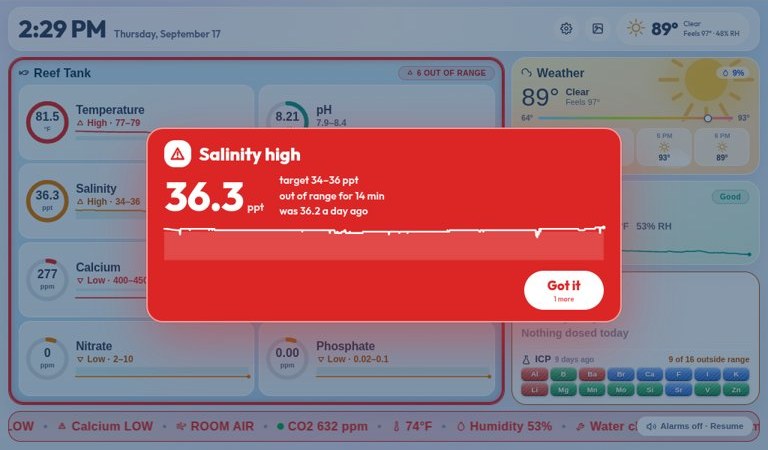
When a parameter leaves its range, a pop-up takes over the screen and the panel's speakers sound — at any hour for the urgent ones, quiet hours respected for the rest. Tap Got it and it retreats to the ticker along the bottom until it's fixed. Pushes to your phone too.
Your ICP results on dials, with the elements that are out of range in the colours you'd expect. Log water changes and dosing; ReefGauge turns a low reading into a measured dose for the supplements you actually use — two-part, Red Sea, Triton, Balling, ESV, Moonshiners.
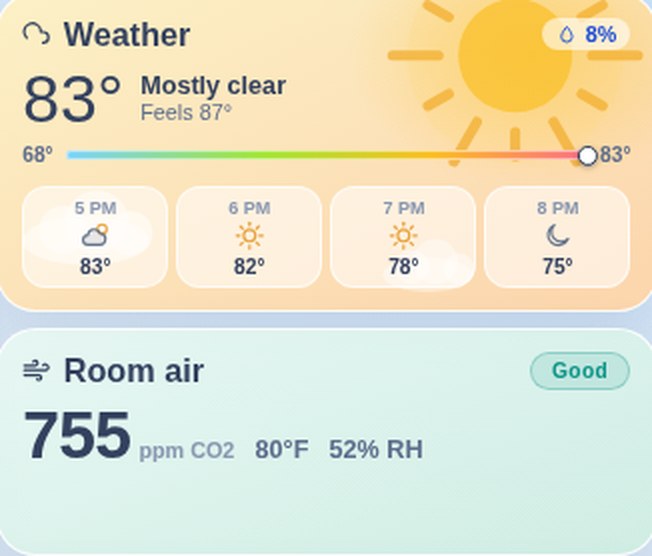
A CO₂ sensor in the display watches the air the tank breathes — high room CO₂ pulls pH down — alongside temperature and humidity. Outside, the local forecast and radar, because a storm on the way is a power cut on the way.

No, but it's the best case. With an Apex and Trident everything is automatic. Without a controller you still get ICP results, the chemistry log and dosing, room air, weather and alerts on what you log by hand.
Only for the weather, radar and phone pushes. Your controller, your ReefBeat gear and the display talk over your own network; if the internet goes down the reef screen keeps working.
No. You buy the display, it's yours. Software updates are free and install from the settings screen.
Not yet — remote viewing is the first thing after launch. For now you get alerts on your phone, and the display itself in the room.
HYDROS and GHL are next. If you run something else, tell us what — the list of what people own decides what comes after.
Early 2027. Price to be announced; the launch list hears first, and hears about the introductory price.
Launch news, the introductory price, and a look at the case coming off the printer.